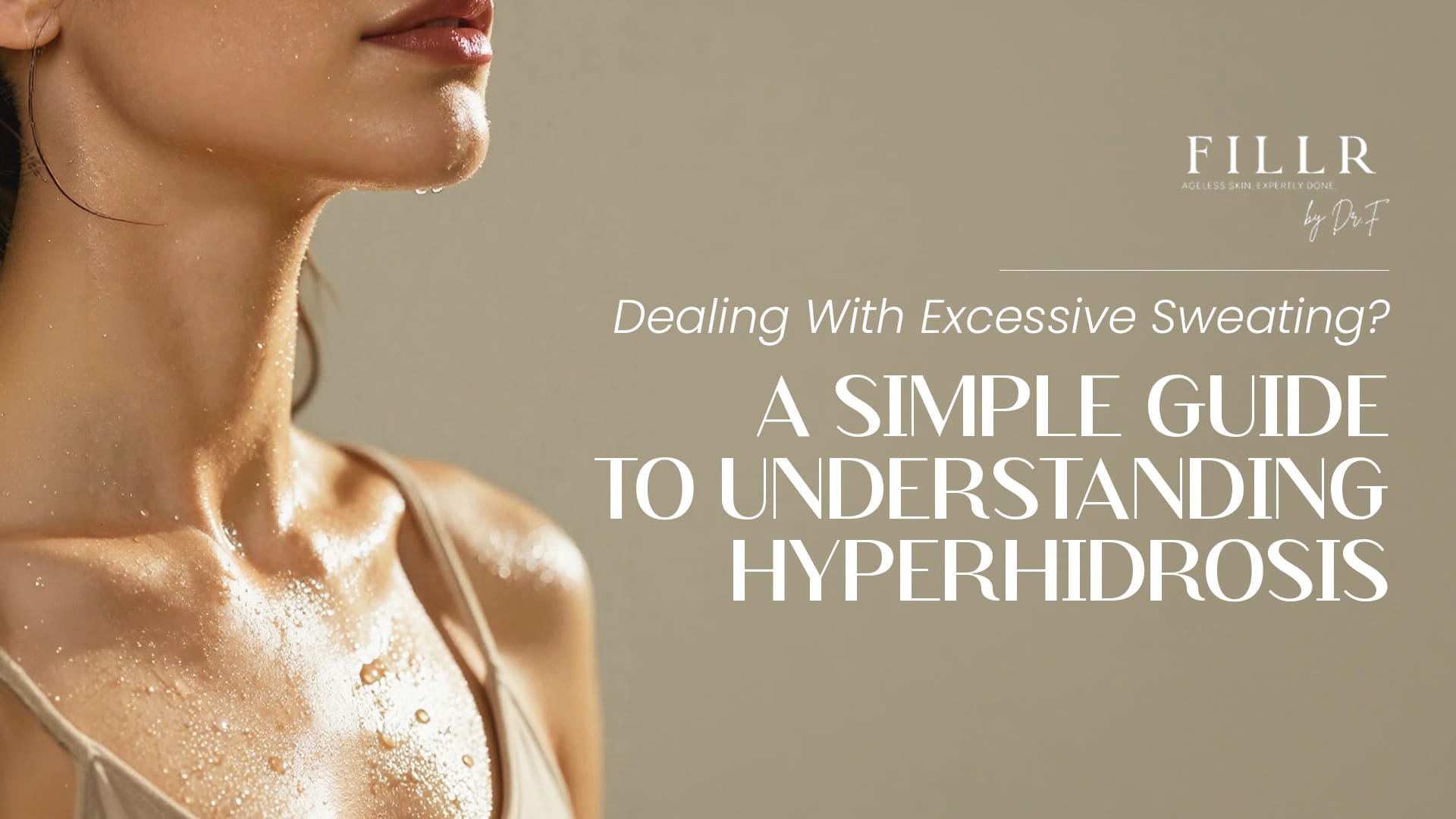
Sweating is a natural process that most of us rarely think about until it starts affecting everyday life. After a workout, on a hot summer afternoon, or during a stressful presentation, perspiration is completely normal. It’s the body’s way of regulating temperature and keeping us cool. But for some people, sweating happens while sitting in an air-conditioned office, during a casual conversation, or even while doing absolutely nothing at all.
If you’ve ever found yourself avoiding certain coloured shirts because of underarm sweat, wiping your hands before every handshake, or wondering why your palms seem damp no matter the weather, you’re not alone. What many people dismiss as “just being a sweaty person” could actually be a recognized medical condition called hyperhidrosis.
The good news is that excessive sweating doesn’t have to be something you just put up with. There are effective treatments that can help bring it under control. First, let’s understand what the condition entails.
What is hyperhidrosis?
Hyperhidrosis is a condition where the body produces excessive sweat beyond what’s needed to regulate temperature. In simple terms, your sweat glands become overactive, even when your body doesn’t actually need cooling.
Unlike normal sweating, which usually occurs in response to heat, exercise or emotional stress, hyperhidrosis can occur during completely ordinary moments. You might notice sweaty palms while typing on your laptop, sweaty armpits while sitting in a meeting, or find yourself changing clothes halfway through the day despite spending most of it indoors.
According to the International Hyperhidrosis Society, primary hyperhidrosis commonly begins during childhood or adolescence, yet many people wait 10 years or more before seeking treatment, often because they believe nothing can be done or feel embarrassed discussing it.
Why does it happen?
There isn’t a single or a direct answer.
Doctors generally classify hyperhidrosis into two categories: primary hyperhidrosis and secondary hyperhidrosis.
Primary hyperhidrosis is the most common form. It isn’t caused by poor hygiene or an underlying illness. Instead, it’s believed that the nerves responsible for activating the sweat glands become overactive, sending signals even when the body doesn’t actually need to cool itself. This type of sweating usually affects specific areas such as the hands, feet, face or hyperhidrosis armpits, and often occurs symmetrically on both sides of the body.
Secondary hyperhidrosis is different. In these cases, increased sweating happens because of another medical condition or as a side effect of certain medications. Hormonal changes, infections, thyroid disorders, diabetes and menopause are just a few examples. Night sweats, or perspiring at night, are more commonly associated with secondary causes and should always be assessed by a healthcare professional to rule out any underlying medical conditions.
Understanding the cause is important because it determines the most appropriate hyper sweating treatment or hyperhidrosis treatment. Treating the symptom without identifying the reason behind it rarely produces lasting results.
When is sweating considered “too much”?
Everyone sweats differently, which makes this question surprisingly difficult to answer.
The amount of sweat itself isn’t always the most important indicator. Instead, doctors look at how sweating affects everyday life.
If you regularly experience any of the following, it may be worth speaking with a healthcare professional:
- Your clothes become soaked without physical activity.
- You avoid certain colours because of visible underarm sweat.
- You struggle with sweaty palms during work or social situations.
- Your hands are often too damp to comfortably hold a pen, use your phone or shake someone’s hand.
- You frequently change clothes because of underarm perspiration.
- Your sweating occurs even when you’re cool and relaxed.
For many people, these habits gradually become normal. They carry tissues everywhere, keep their arms close to their sides in photographs, or plan outfits around hiding sweat marks. Over time, what begins as an inconvenience can quietly influence confidence, work, relationships and daily routines. But it doesn’t have to be that way.
Can hyperhidrosis be treated?
Absolutely.
The most effective excessive sweating treatment depends on where the sweating occurs, how severe it is, and whether it’s classified as primary or secondary hyperhidrosis.
For mild cases, doctors may recommend prescription-strength antiperspirants or lifestyle adjustments. Other options, such as oral medications or iontophoresis (a treatment commonly used for sweaty hands and feet), may also be appropriate for some people.
When sweating is more persistent, particularly in the underarms, one treatment has consistently shown excellent results: Botox
Originally recognised for its cosmetic uses, Botox to reduce sweating has been approved for treating primary axillary hyperhidrosis (excessive underarm sweating) and is widely used around the world for people whose sweating hasn’t responded well to topical treatments.
How does Botox reduce sweating?
It may sound surprising at first, but underarm Botox doesn’t stop your body from sweating altogether.
Instead, it temporarily blocks the chemical signals between the nerves and the sweat glands in the treated area. Without those signals, the sweat glands simply produce far less sweat.
It’s important to remember that the treatment is localised. If Botox is used to treat hyperhidrosis in the armpits, it only reduces sweating in the underarms. Your body continues to regulate temperature normally by sweating from other areas when needed.
The treatment itself is quick, requires little to no downtime, and most people return to their normal routine immediately afterwards.
According to the International Hyperhidrosis Society, clinical studies have shown that Botox can reduce underarm sweating by approximately 82–87%, with results typically lasting between 4 and 12 months, depending on the individual. Once the effect gradually wears off, the treatment can simply be repeated to maintain the results.
For many patients, it’s not just the reduction in underarm sweat that makes the difference, it’s the confidence that comes with no longer planning their day around it.
Is Botox the right treatment for everyone?
Not necessarily.
Although sweat Botox is considered one of the most effective treatments for underarm perspiration, the best approach always depends on the cause of the sweating.
If increased sweating is linked to an underlying medical condition, treating that condition may be the priority. If the sweating mainly affects the palms or soles of the feet, your doctor may discuss alternative treatment options alongside or instead of Botox.
That’s why an assessment is always the first step. Understanding why you’re sweating excessively allows your practitioner to recommend the most appropriate hyperhidrosis treatment, rather than applying the same solution to everyone.
You don’t have to plan your life around sweat
Many people with hyperhidrosis spend years adapting their routine. Choosing certain colours because they hide underarm sweat. Avoiding handshakes because of sweaty palms. Packing an extra shirt “just in case.” Holding back in social situations for fear that someone might notice. Over time, those small adjustments become second nature. But they don’t have to.
If excessive sweating has started affecting your comfort, confidence or everyday life, it’s worth speaking to a qualified medical professional. There are now several effective over-sweating treatment options available, and finding the right one starts with understanding what’s causing the problem.
If you’re experiencing hyperhidrosis or looking for a personalised hyperhidrosis treatment, book a consultation with our team. We’ll assess your symptoms, identify the underlying cause, and recommend the most suitable treatment plan for your lifestyle and goals.