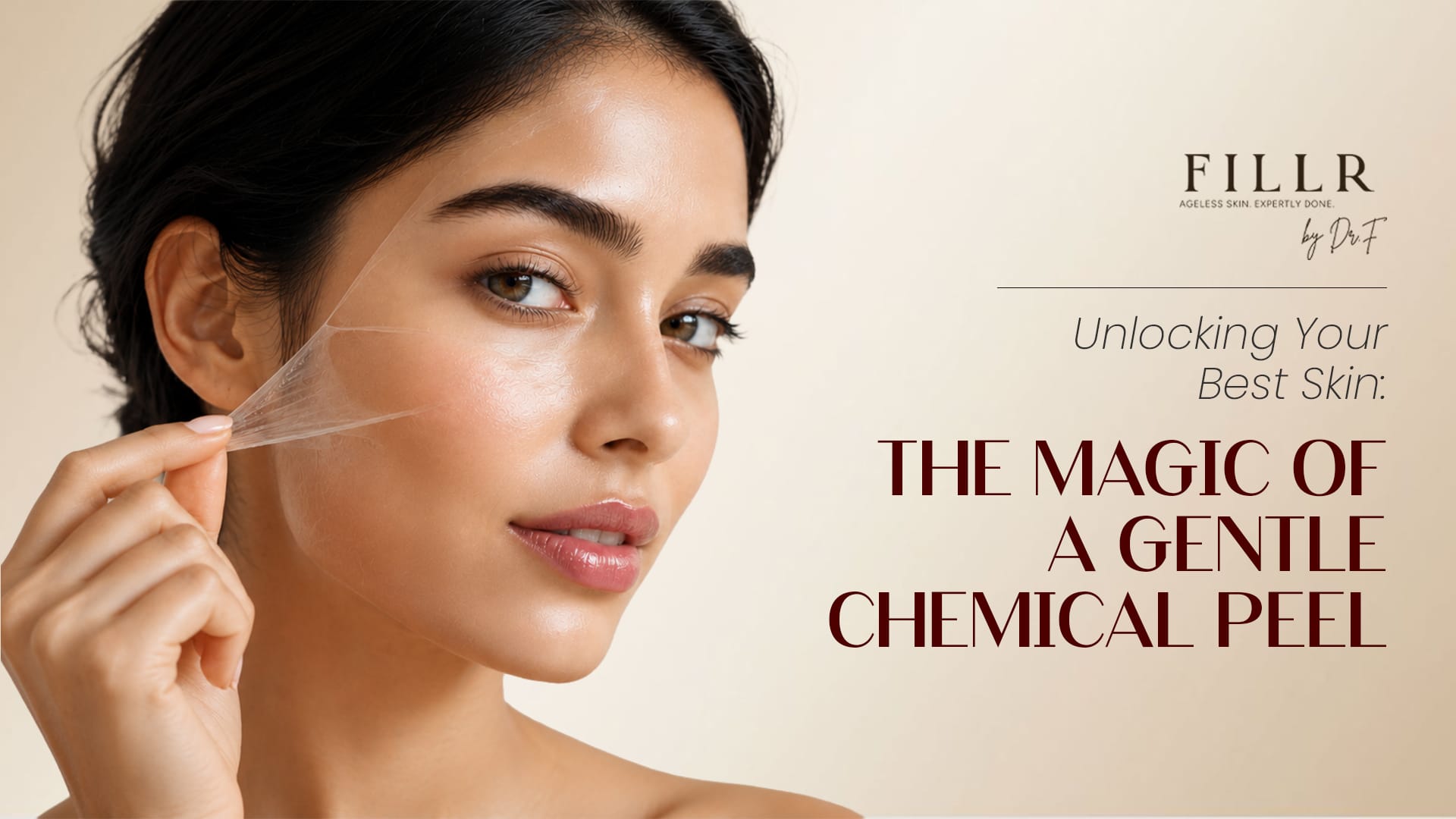
There comes a point when your skin just doesn’t look quite like it used to. And it’s not one specific identifiable problem, which makes it confusing
It feels a little dull no matter how much moisturiser you use. A breakout leaves behind marks that seem to reside for months, while old pigmentation refuses to fade despite trying every brightening serum available on the shelf.
Sometimes it’s uneven skin tone. Sometimes it’s enlarged pores around the nose and cheeks. Other times, it’s the way your complexion has gradually lost its brightness without you really noticing.
Like many people, your first instinct is probably to try another product to your skincare routine. A stronger exfoliant. A new vitamin C serum. A different cleanser.
While these products certainly serve their purpose, they won’t replenish the look you used to have. Sometimes, it’s about helping your skin do what it naturally knows how to do: renew itself.
That’s exactly where chemical peel treatments come in.
Despite their intimidating name, modern chemical peels for the face are far gentler and far more personalised than many people imagine. Rather than dramatically “peeling” the skin away, today’s treatments are carefully selected to encourage healthier skin renewal, helping address concerns such as hyperpigmentation, skin dullness, fine lines, uneven skin tone, acne, and even enlarged pores.
The result: healthier skin that’s functioning the way it should.
Why does skin lose its glow?
Our skin is constantly renewing itself. Every day, old skin cells naturally shed while fresh ones rise to the surface. When we’re younger, this cycle happens relatively quickly, keeping the complexion smooth, bright and even.
As we get older, however, this process gradually slows down. Environmental factors such as sun exposure, pollution, hormonal changes and previous acne can also interrupt this natural renewal cycle. Instead of shedding efficiently, dead skin cells accumulate on the surface, creating a complexion that appears dull, rough and uneven.
For example, someone looking for a pigmentation treatment may also notice their skin lacks radiance. Someone seeking an open pores treatment may also feel their complexion has become rougher over time.
That’s because many common skin concerns share the same underlying issue: slower cell turnover.
Rather than revealing fresh skin efficiently, the surface becomes weighed down by older cells that no longer serve a purpose.
So, what exactly is a chemical peel?
The name has done chemical peels a slight disservice. When people hear it the first time, they often imagine something harsh or painful. Images of severe peeling, redness and weeks of hiding indoors immediately come to mind.
Fortunately, modern gentle chemical peels are nothing like that. A chemical peel treatment is simply a carefully controlled form of exfoliation performed using medical-grade acids that have been specifically selected for your skin type and concerns.
Instead of physically scrubbing away dead skin, the solution works by loosening the bonds that hold old, damaged skin cells together. This allows them to shed more efficiently, encouraging healthier skin to appear underneath.
The strength of the peel is never a case of “stronger is better.” In fact, many dermatologists and aesthetic practitioners now prefer gentle chemical peels because they achieve consistent improvements with minimal downtime while respecting the skin barrier.
That’s particularly important when treating concerns like chemical peel for sensitive skin, where preserving the skin’s health is just as important as improving its appearance.
Rather than overwhelming the skin, a well-chosen peel works with its natural biology, encouraging gradual improvements that continue long after the treatment itself.
Are chemical peels suitable for sensitive skin?
One of the biggest misconceptions is that sensitive skin automatically rules out a chemical peel. In reality, the opposite is often true. The procedure is defined by the ingredients used, their concentration, the time they’re left on the skin and, most importantly, whether they’re appropriate for your skin.
This is why consultation matters so much.
An experienced practitioner doesn’t simply choose the strongest peel available. Instead, they assess your skin type, current skincare routine, previous treatments, medical history and specific concerns before recommending the most suitable option.
For some people, that may mean a lactic acid peel designed to gently hydrate while improving brightness. Others may benefit from mandelic acid, which is often well tolerated by acne-prone or reactive skin. Different acids serve different purposes, and choosing the right one is far more important than choosing the strongest one.
That’s also why a chemical peel for sensitive skin should never be approached as a one-size-fits-all treatment.
The best results come from personalisation, not intensity.
What can a gentle chemical peel improve?
One of the reasons chemical peels for the face remain such a popular treatment is because they rarely target just one concern.
By encouraging healthier skin renewal, they can help improve multiple aspects of the complexion at the same time.
A personalised chemical peel may help improve:
- Hyperpigmentation
- Chemical peel for pigmentation
- Uneven skin tone
- Acne and post-acne marks
- Skin dullness
- Fine lines
- Rough skin texture
- Enlarged pores
- Overall skin clarity and radiance
For people specifically looking for a hyperpigmentation chemical peel, the treatment can gradually help fade areas of excess pigment by encouraging the skin to replace older, pigmented cells with healthier new ones over time.
It’s important to remember that pigmentation rarely disappears after a single treatment. Like most regenerative skin treatments, improvement is gradual and often achieved through a series of sessions combined with appropriate home skincare and daily sun protection.
What happens during a chemical peel treatment?
One of the biggest surprises for first-time patients is just how straightforward the treatment actually is.
A good chemical peel treatment doesn’t begin with applying acids to the skin. It begins with understanding the skin itself.
Your practitioner will first assess your skin type, current concerns, medical history and skincare routine before recommending the most appropriate peel. After all, someone seeking a chemical peel for pigmentation may need a very different formulation from someone looking to improve acne, fine lines, or uneven skin tone.
Once your skin has been cleansed, the peel solution is carefully applied and left on for a specific amount of time depending on the formulation and your skin’s tolerance. You may notice a mild tingling or warming sensation, but most gentle chemical peels are well tolerated and don’t require any downtime beyond temporary redness.
The entire appointment is usually completed within 30 to 45 minutes, making it an easy treatment to fit into a busy schedule.
Will your skin always peel?
Not necessarily. Despite the name, visible peeling isn’t guaranteed—and it’s certainly not the measure of a successful treatment.
Some people experience light flaking over the following few days, while others notice almost no peeling at all. Both responses can be completely normal.
What matters most is what’s happening beneath the surface.
A chemical peel works by encouraging healthier cell turnover, not by producing dramatic sheets of peeling skin. In many cases, the improvements become noticeable through smoother texture, a brighter complexion and more even skin rather than visible peeling.
This is one of the reasons modern gentle chemical peels have become so popular. They allow people to address concerns such as skin dullness, uneven skin tone, hyperpigmentation, and fine lines without significant disruption to everyday life.
Looking after your skin afterwards
The treatment may only take half an hour, but what you do afterwards plays an important role in the final result.
Following a chemical peel treatment, your skin is in a renewal phase. During this time, it’s best to keep your routine simple and supportive.
Your practitioner may recommend:
- Wearing a broad-spectrum SPF every day.
- Keeping the skin well hydrated with a gentle moisturiser.
- Avoiding harsh exfoliants or active ingredients for several days.
- Letting any flaking occur naturally rather than picking at the skin.
Sun protection is especially important. Freshly renewed skin is more sensitive to UV exposure, and protecting it helps maintain your results while reducing the risk of future pigmentation.
For anyone undergoing a hyperpigmentation chemical peel or chemical peel for pigmentation, consistent sunscreen use is just as important as the treatment itself.
Is a chemical peel right for you?
A chemical peel for the face is to improve the quality of your skin. Whether your main concern is uneven skin tone, lingering acne marks, skin dullness, fine lines, enlarged pores, or you’re exploring a pigmentation treatment, a personalised peel can often become part of a broader skincare plan designed around your individual needs.
For people searching for an open pores treatment or open pores on face treatment, it’s important to understand that pores can’t be permanently “closed.” However, by improving skin texture, encouraging healthy exfoliation and supporting collagen renewal, chemical peels can help pores appear more refined and less noticeable over time.
Similarly, while some people search for a skin- lightening or skin-whitening treatment, the real goal of professional skin treatments is not to change your natural skin colour. Instead, the focus is on restoring clarity, reducing excess pigmentation and creating a healthier, more even complexion that allows your skin to look its best.
The right treatment should always enhance your skin—not change who you are.
Healthy skin is built over time
The best skin rarely comes from one product or one treatment alone.
It’s built through consistency, professional guidance and treatments that work with your skin rather than against it.
A chemical peel is one of the most effective ways to support that journey because it encourages your skin’s natural renewal process instead of masking concerns on the surface. Whether you’re looking to improve hyperpigmentation, address uneven skin tone, brighten skin dullness, refine texture, or support long-term skin health, the treatment can be tailored to your individual needs and goals.
If you’re considering a chemical peel treatment, the first step is a professional consultation. Understanding your skin allows your practitioner to recommend the most appropriate peel, create a personalised treatment plan, and ensure your skin is cared for every step of the way.
Book a consultation with our team to discover whether a gentle chemical peel is the right treatment for your skin, and let us help you achieve a healthier, brighter and more balanced complexion.